
Consumer demand for a variety of meatless alternatives continues to grow, according to behavioral research platform Veylinx, which recently released a study about plant-based alternatives. More than three-quarters of respondents said they could be convinced to buy meat alternatives more frequently, especially with improved taste and price. It also found that calling a hot dog “meatless” instead of “vegan” boosts demand. Read on for more details and key findings of the study.
Plant-Based Growth Opportunities
Opportunities abound for innovative brands to drive plant-based revenue growth. While only 5% of study participants identify as vegan or vegetarian, a majority (77%) said they could be convinced to buy meat alternatives more frequently. But greater concern for animals or the environment won’t be the biggest drivers of change. When it comes to purchasing alternative proteins more often, improved taste would convince 35%, and a lower price would persuade 28%.
Veylinx, which uses behavioral research to measure consumer purchasing habits, tested seven proteins (meat, plant-based with meatlike properties, conventional plant-based, cultivated meat/fish, mycoprotein, microalgae and insect) across different categories, including burgers, bacon, jerky, lasagna and more. It also measured demand for big-name brands like Amy’s, Beyond Meat and Sweet Earth to determine what consumers value most and what impacts their willingness to pay.
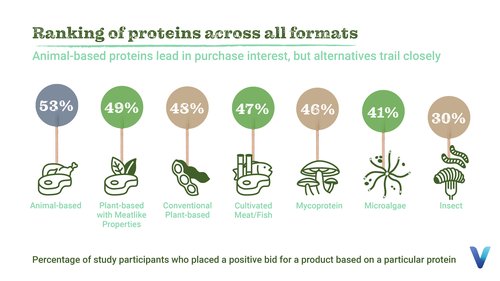
As expected, meat-based proteins drive the most purchase interest, but alternatives trail closely, with consumers expressing varied preferences for substitutes across categories. While cultivated (i.e., lab-grown) meat is the preferred alternative for burgers, jerky, nuggets and filet mignon, plant-based with meatlike properties drives the greatest demand for bacon and lasagna, and microalgae is favored for sushi. Shoppers are also willing to pay extra for plant-based lasagna and plant-based bacon—even more than for beef lasagna and pork bacon.
Meat-Free Messaging
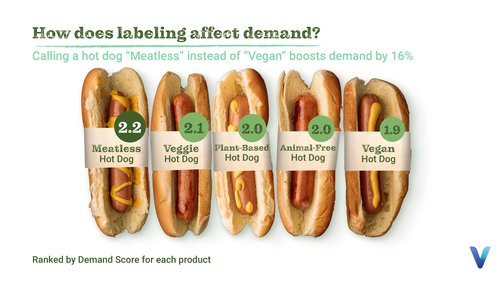
The study examined naming conventions in the hot dog category to uncover whether labeling affects purchase interest. It found that calling a hot dog “meatless” instead of “vegan” boosts demand by 16%. “Meatless” drives the greatest demand, followed by “veggie,” “plant-based,” “animal-free,” and finally “vegan.”
The study also found that personal benefits rule, but negative messaging resonates. Consumers tend to buy alternative proteins for personal benefits—notably, because they are “healthier than meat” (42%) and because they “prefer the taste” (35%). Less than 30% of participants list “animal welfare” and “better for the environment” as purchase reasons.

When it comes to changing their habits and buying alternative proteins more often, only 23% say that nothing could convince them to purchase meat alternatives more frequently. Gen Z consumers express more willingness to change their diets, with 87% stating that they could be persuaded to buy more meatless products.
Veylinx also tested the effect of animal welfare, environmental and health warnings on meat demand. When consumers are presented with statements highlighting the negative effects of meat consumption, demand falls. Animal welfare messaging reduces purchase interest by 7%, while environmental messaging shrinks it by 6%. While consumers may choose meatless alternatives for health reasons, warnings about the negative health effects of meat consumption actually drop purchase interest by 2%.
Finally, younger consumers favor government policies to shift consumers’ meat eating habits. Overall, 37% of participants say they would support an extra 10% meat tax to reduce consumption, and 51% say the government should subsidize meat alternatives. Gen Z shows much greater interest in these policies, with 62% supporting a meat tax and 71% advocating subsidies to reduce prices and stimulate innovation.
